Kareem Amin spent seven years building Clay before most people had heard of it. Then, in roughly twelve months, revenue went from $31 million to $100 million, and the company most people describe as an "overnight success" quietly became one whose customer list includes OpenAI, Anthropic, Cursor, and Canva, the exact companies everyone assumes have no need for outside sales tooling.
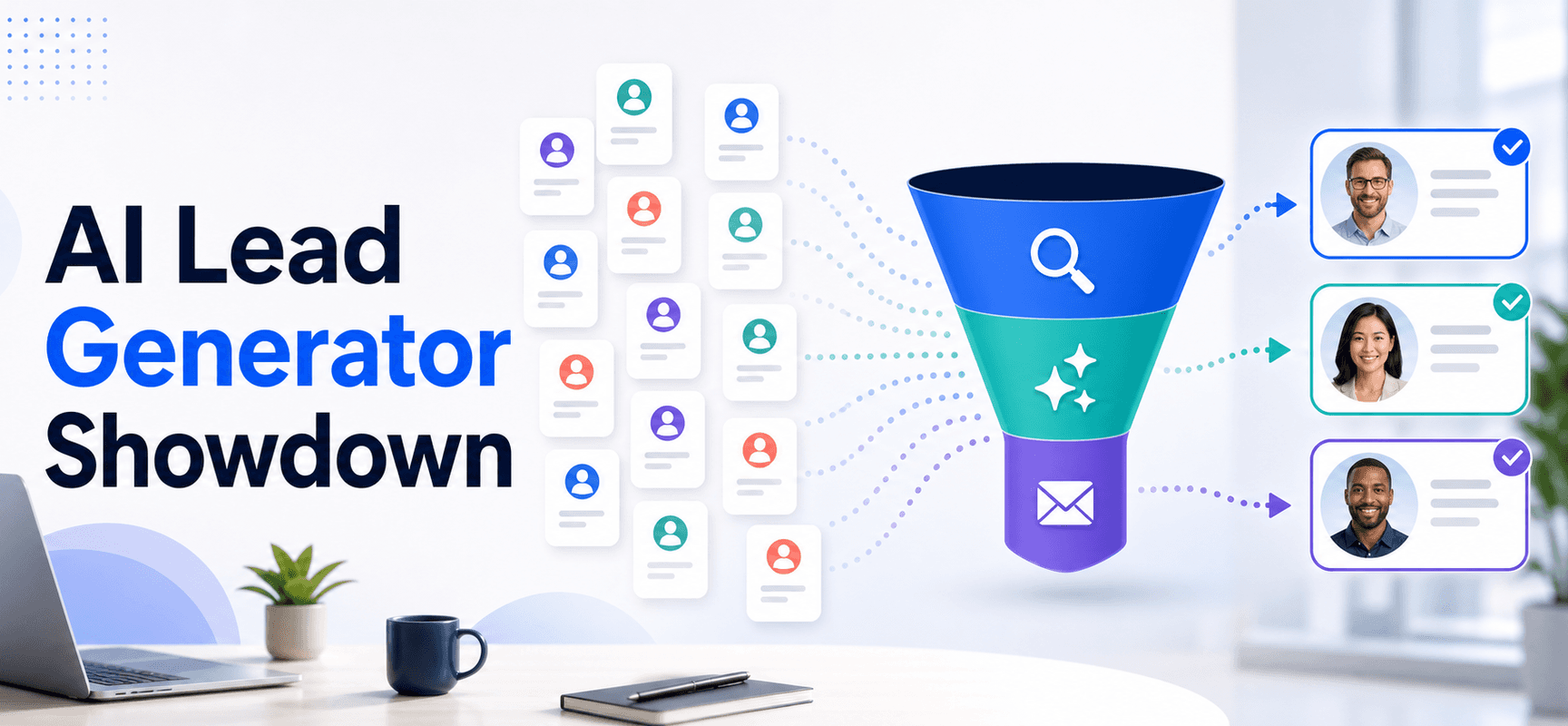
Clay is a data enrichment and outbound automation platform for sales and marketing operations teams, pulling prospect and company information from more than 200 providers and running it through AI agents called Claygents to research and personalize outreach at scale. Instead of trusting one data vendor's gaps, Clay's waterfall queries provider after provider until something returns a match, then only charges you for the one that worked.
Amin, previously VP of Product at The Wall Street Journal, co-founded Clay with Nicolae Rusan in June 2017. Varun Anand joined as a third co-founder in 2021. By January 2026, a $100 million round from CapitalG had pushed the company's valuation to $5 billion.
This review covers what the waterfall enrichment and Claygents actually do, what Clay costs once you're past the free tier, and who this is genuinely built for versus who's about to waste a subscription.
Short answer: Clay is worth it if your team runs real outbound volume and currently pays for three or four separate enrichment tools. It's the wrong purchase if you're a solo operator or don't have a defined GTM motion to plug it into yet.
Quick Verdict
Metric | Detail |
|---|---|
AIwithKay score | 7.8/10 |
User ratings | 4.7-4.9/5 on G2 (300+ reviews), but 2.2-2.5/5 on a small Trustpilot sample (under 10 reviews) |
Best for | Sales and marketing operations teams running outbound at real volume |
Starting price | Free, or $167/month (roughly $54/month billed annually) for Launch |
Free plan | Yes, 500 actions and 100 data credits a month, genuinely enough to test before paying |
Bottom line | The multi-provider waterfall genuinely finds data single-source tools miss, but the interface has a real learning curve and costs scale fast once you're enriching at volume |
What Works Well / What To Watch
What works well:
Waterfall enrichment genuinely outperforms single-source tools. Querying 200+ data providers in sequence and only paying for the one that returns a match means fewer dead ends than a tool locked to one vendor.
Claygents are flexible AI research agents you can point at almost any task, not just standard fields, pulling a company's tech stack, a founder's latest interview, or hiring signals on demand.
The free tier is generous enough to actually test the product: 500 actions and 100 data credits a month, not a token trial.
Deep native integrations with Salesforce, HubSpot, ad platforms, and webhooks mean lists move into your existing workflow instead of living in a spreadsheet you export by hand.
Used in production by some of the most technically sophisticated AI companies in the world, OpenAI and Anthropic among them, a real signal about how it performs at scale, not just a logo on a homepage.
What to watch:
The table-and-formula interface takes real time to learn. This is closer to a workflow IDE than a plug-and-play tool, and reviewers who expected the latter are the ones who churn early.
Data credits and actions meter separately, and enrichment-heavy workflows burn through both faster than the sticker price suggests.
The jump from Launch ($167/month) to Growth ($446/month) is large, and can force an awkward mid-year budget decision as your usage scales.
If you're not doing sales or marketing prospecting, most of the platform is wasted, this is not a general-purpose data tool.
A small but consistent thread of complaints describes bugs consuming credits with no clear cause and auto-recharge billing with no advance warning, worth watching closely in your first month.
What Is Clay?
Kareem Amin co-founded Clay in June 2017 with Nicolae Rusan, before joining a wave of AI hype that came years later. Amin had previously been VP of Product at The Wall Street Journal and had already sold one company, Frame, to Sailthru in 2012. His stated goal for Clay was to make building software as intuitive as "molding clay," which is where the name comes from, though the product that found product-market fit years later looked different from that original vision.
That's the part of Clay's story worth knowing before you judge it by its current hype: this was not an overnight AI wrapper built in a weekend. Varun Anand joined as a third co-founder in 2021, years into the company's life, and the growth that actually made Clay a household name in sales operations circles, revenue tripling to $100 million and valuation reaching $5 billion, happened only in the last twelve months, after roughly seven years of building. Investors including CapitalG backed the January 2026 round specifically on the strength of that recent inflection, not a speculative story about where AI might go.
The product itself reflects that patience. Where a lot of AI sales tools bolt a chatbot onto a CRM, Clay built its own table-based workspace from the ground up, treating enrichment and outreach as a data pipeline you construct visually, formula by formula, rather than a black box you type a prompt into.
Key Features
Claygent AI research. AI agents that browse the web and pull specific facts on any person or company you point them at, not limited to a fixed set of fields.
Waterfall enrichment. Queries multiple data providers in sequence until one finds a match, so you're not stuck with a single vendor's coverage gaps.
Intent signals. Tracks job changes, company news, and hiring activity to flag which leads are actually worth a message right now.
CRM sync. Keeps Salesforce or HubSpot records enriched and current automatically, instead of a one-time import that goes stale.
Email sequencer. Built-in outreach tooling so you can go from enriched list to live campaign without exporting to a separate platform.
Ad audience sync. Pushes enriched lists directly into LinkedIn, Meta, and Google Ads for paid targeting built on the same data.
How Clay Performs In Practice
No paid Clay account was run specifically for this review. This section is built from the consistent pattern across 300-plus G2 reviews and a much smaller Trustpilot sample, worth stating directly rather than presenting secondhand evidence as a hands-on test.
The G2 pattern (4.7-4.9/5 depending on the snapshot) comes overwhelmingly from RevOps operators who climbed the learning curve and now treat Clay as core infrastructure, not a nice-to-have. That's a meaningfully different reviewer population than a typical SaaS tool's G2 base, these are people who invested real setup time and are reporting back after finding value on the other side of it.
The Trustpilot picture is genuinely harder to read responsibly: the sample is under 10 reviews, small enough that a couple of frustrated users can swing the average significantly, currently sitting around 2.2-2.5/5. The specific complaints are worth naming rather than dismissing outright, bugs that consume credits without a clear cause, support that reviewers describe as slow or dismissive, and auto-recharge billing with no advance reminder before the charge hits. Take the direction of that signal seriously (know your credit consumption before it becomes a bill you didn't expect) without treating a 9-review average as equivalent to the 300-review G2 signal in statistical weight.
Clay Pricing in 2026
Verified directly on Clay's official pricing page the day this was written.
Plan | Price | What You Get |
|---|---|---|
Free | $0/month | 500 actions/month, 100 data credits/month, unlimited seats and tables, Claygent access, up to 200 rows per table |
Launch | $167/month, or roughly $54/month billed annually | 15,000 actions/month, 2,500 data credits/month, phone enrichment, job-change and news signals, email campaign integrations |
Growth | $446/month, or roughly $185/month billed annually | 40,000 actions/month, 6,000 data credits/month, CRM auto-sync, HTTP API and webhooks, unlimited ad audiences, priority support |
Enterprise | Custom, annual commitment | Custom action and credit allocations, unlimited audiences across all sources, SSO, RBAC, dedicated growth strategist |
Is it worth the price? For a team running real outbound volume, replacing three or four separate enrichment subscriptions with one waterfall that finds more matches is a legitimate trade, especially once you're past the free tier's 200-row ceiling. For anyone testing the waters without a defined outbound motion yet, stay on Free until you have a concrete campaign to run through it, the jump to $167/month is not worth paying speculatively.
Clay vs Competitors
Tool | Best For | Starting Price | Key Differentiator |
|---|---|---|---|
Clay | Sales/marketing ops teams wanting AI-driven enrichment plus outreach in one workspace | Free | Multi-provider waterfall enrichment, only pay for the source that returns a result |
Apollo.io | Teams wanting a built-in contact database plus sequencing | $49/month | Larger native contact database, less flexible enrichment logic than Clay's waterfall |
ZoomInfo | Enterprise teams needing the deepest single-vendor data | Custom, enterprise pricing | Deeper proprietary data on large accounts, no multi-provider waterfall, no AI agent research layer |
Apollo.io is the more approachable starting point if you want contact data and outreach sequencing in one simpler tool, without Clay's steeper table-based learning curve. ZoomInfo wins on raw data depth for large enterprise accounts, but it's a single data source rather than a waterfall, and it doesn't offer Clay's flexible Claygent research layer. Clay's real edge is combining breadth (200+ providers) with genuinely open-ended AI research, at the cost of asking more setup time from you upfront.
Who Clay Is Best For
Best for:
Sales and marketing operations teams running real outbound volume who currently juggle multiple enrichment tools.
Anyone whose lead lists need research beyond standard fields, funding stage, tech stack, recent news, that a fixed-schema tool can't capture.
Teams with the budget and patience to invest real setup time into a table-based workflow before expecting a return.
Skip it if:
You're a solo operator or small team without a defined outbound motion yet, start on Free and wait for a real use case.
You want a plug-and-play tool with zero learning curve, Apollo.io or a simpler sequencer will get you moving faster.
Your main need is deep data on large enterprise accounts specifically, ZoomInfo's single-source depth may serve that narrower job better.
Final Verdict: Is Clay Worth It?
Clay's seven-year path to a $5 billion valuation is the part of the story worth remembering when the pricing feels steep or the interface feels unfamiliar. This wasn't built to chase an AI headline, it was built by people who spent years watching sales operations teams juggle broken, single-source data tools, and only found explosive growth once the underlying product was actually ready for it.
For a team with real outbound volume, the waterfall enrichment and Claygent research genuinely save the hours that "hunting for a valid email across five tools" used to cost, and the customer list, OpenAI and Anthropic among them, is a real signal, not just a logo wall. For anyone without a defined GTM motion to plug it into yet, the free tier is worth exploring, but the paid jump isn't worth making speculatively.
Curious to see how it performs?
Try
Clay
Now
GOT ANY QUESTIONS LEFT?
Is Clay worth it in 2026?
How much does Clay cost?
Why does Clay have such a low Trustpilot score?
Does Clay replace my CRM?